In this guide
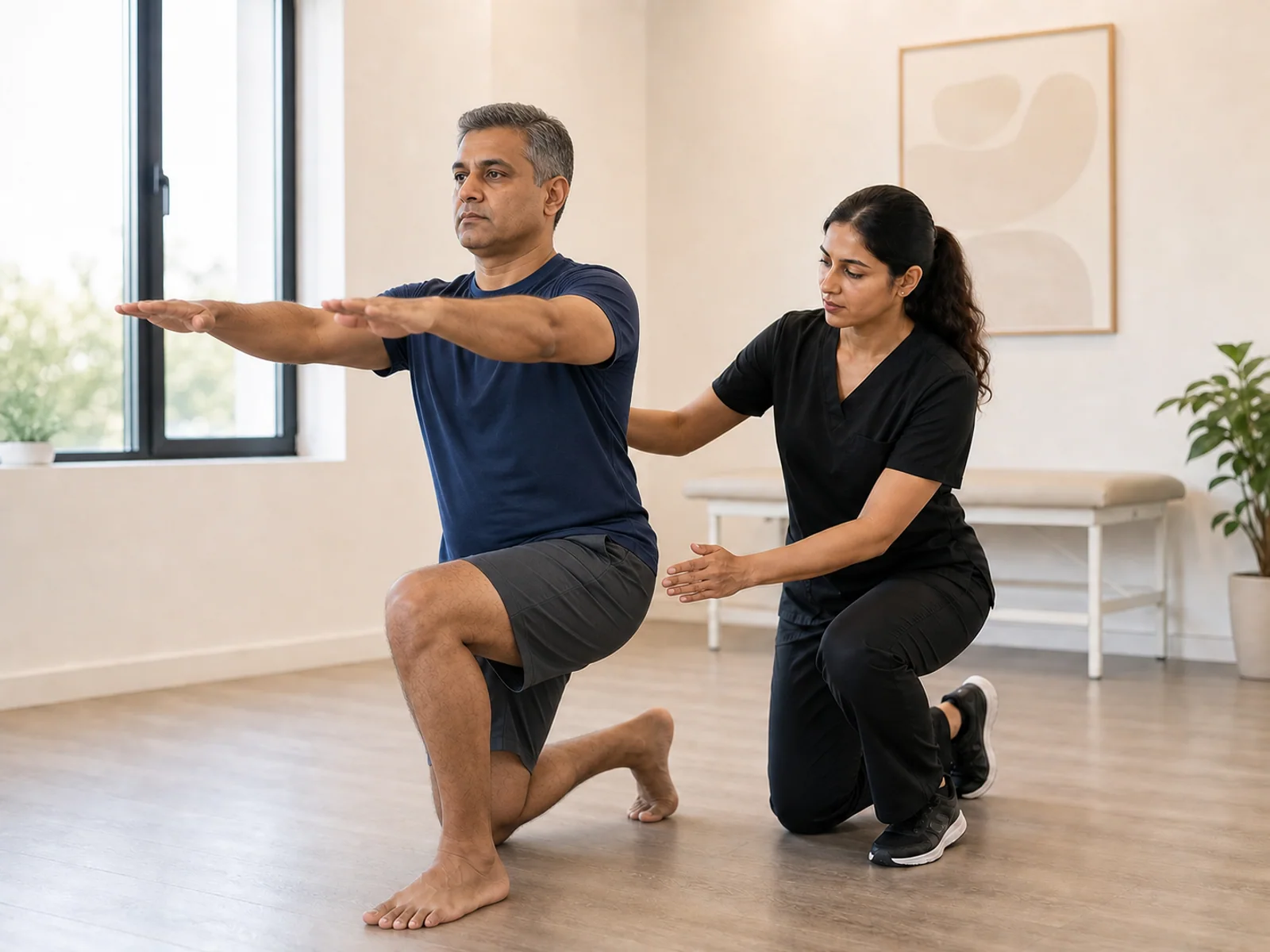
Representative service imagery.
An injury can interrupt more than a workout. You may miss walking with family, struggle with stairs or hesitate before lifting something that used to feel ordinary. When symptoms settle, the next question often arrives: how do you start again without guessing?
Returning to exercise needs a plan that connects your current ability with the activity you want back. This guide explains useful questions about assessment, exercise therapy, graded loading and progress. It is general information, not clearance to resume a sport or an exercise prescription for an unassessed injury.
First, check whether the injury needs medical attention
After an injury, seek emergency medical assessment if you heard a crack, the body part looks deformed, you have numbness or tingling, or the skin becomes blue, grey or cold. These are warning signs in the NHS sprains and strains guidance, and a broken bone or another significant injury may need assessment.
Seek urgent medical advice for severe or worsening pain, substantial or increasing swelling or bruising, inability to bear weight or walk more than a few steps, marked difficulty moving, or fever and feeling shivery. Do not wait for a routine rehabilitation appointment or a WhatsApp reply about these symptoms. Use local emergency or urgent-care services in Pakistan; the NHS contact numbers on the linked page are for the UK.
Establish a starting point before choosing exercises
An exercise that suits someone else may not suit your injury, stage or medical restrictions. Bring the story behind the problem: when it began, whether there was a sudden event, which activities changed and what you can manage now.
The NHS overview of physiotherapy describes discussing symptoms, medical history and lifestyle, checking relevant findings such as strength or balance, and considering treatment options. That conversation helps place an exercise plan in context.
For your appointment, note:
The activity you stopped or changed, and the reason.
Any medical diagnosis, imaging report or restrictions you already have.
Medicines, previous injuries and symptoms that are changing.
The activity you most want to regain, including its real demands.
Ask which findings guide the proposed starting level. Understanding that reasoning is more useful than collecting a long list of exercises without knowing what each is for.
Define what returning means to you
“Getting active again” can mean several different things. A comfortable walk to work, carrying groceries, a gym session and a full football match need different plans.
Make the goal specific enough to discuss. For walking, describe the route, hills and distance you used to manage. For training, describe the movements and demands rather than only the name of your sport. Mention any pressure to return for an event or work deadline.
Ask the clinician to separate the immediate goal from the longer-term one: “What are we working towards now, and what will we review before attempting the next demand?” This gives each appointment a purpose you can follow.
What does load management mean?
Load includes the demands you place on your body through everyday tasks and training. It is not limited to a weight on a machine. Repeated stairs, time spent walking and the amount of lifting in a day can all matter.
Norfolk and Waveney's NHS load-management guidance explains adjusting activities that provoke discomfort, alongside work to improve what you can manage. The aim is to discuss a workable balance rather than use the same activity pattern regardless of your response.
Bring the whole week into the conversation. Ask whether work, household tasks and rehabilitation exercises are competing for the same capacity. If your programme is hard to follow, describe that honestly so the plan can reflect your circumstances.
How graded loading and exercise build into the plan
Exercise therapy means planned exercise used for a rehabilitation purpose. Depending on the assessment, that purpose might involve movement, strength, balance or a task you want back.
Graded loading means changing the demand in agreed steps. Functional strength connects that work with the task you need to manage, such as lifting or using stairs.
Strength work can involve resistance from your body, a band or another suitable load. The NHS resource on understanding exercise distinguishes strengthening from movement exercises and explains that difficulty can be adjusted in several ways.
Ask what should change first: the movement, resistance, repetitions, pace or rest. Also ask what should stay the same while you learn the exercise. You should leave knowing the agreed amount and how to perform it, not having to invent your own progression.
If the instructions are unclear, request a demonstration and explain what you understood. Tell the clinician about any equipment or space limitations at home.
Review function as well as symptoms
Pain matters, but feeling better at rest does not answer every question about readiness for activity. Ask about movement, strength, control and the response to the task you are trying to regain.
For example, the University Hospitals of Derby and Burton ankle-sprain guidance explains that symptoms may settle while stability or strength still needs attention. Later rehabilitation considers the demands of the intended activity. That is an ankle example, not a protocol for every injury.
Agree on a practical progress marker with your clinician. Ask what will be measured, when it will be checked again and what would lead to changing the programme. Keep the marker tied to your goal so improvement is easier to interpret.
Three examples of useful progress questions
These examples show how to discuss progress; they are not exercises to attempt without advice.
Walking: “I can manage my usual short route. What should we check before trying a longer route with hills?” Describe whether you pause, change how you walk or notice a different response afterwards.
Lifting: “The movement feels easier in the clinic. What do I need to demonstrate before increasing the load at work?” Explain the object's weight, the height you lift from and how often the task repeats.
Team sport: “I feel comfortable during a simple training drill. What needs assessment before faster changes of direction or a match?” Describe the specific demand and any hesitation.
These conversations help connect a test or exercise with life outside the clinic. They also give the clinician more information than a single statement that the injury feels better.
Returning to sport is a process
The 2016 international return-to-sport consensus in the British Journal of Sports Medicine describes a progression through participation, sport and performance. Decisions consider the activity's demands, relevant clinical findings and the person's goals. The statement also acknowledges limits in the evidence supporting many return decisions.
A useful discussion therefore asks what stage you are at and what the next stage requires. Modified practice, resuming your sport and reaching your previous performance level can represent different goals. Completing a drill does not automatically answer whether a full match is appropriate.
Tell the clinician if you still feel uncertain. Ask how physical findings and confidence will be discussed together, and who needs to be involved when medical clearance is required. A coach's deadline should be part of that conversation, not the only reason for progression.
Know when to stop and seek a review
Ask for advice specific to your injury about the response expected during exercise, later that day and afterwards. There is no universal pain score or weekly percentage that this article can prescribe safely for everyone.
Leeds Community Healthcare's return-to-activity guidance advises stopping and seeking professional advice for sharp or increasing pain, returning swelling, or loss of movement or strength. Its general advice also emphasises rebuilding gradually.
If that happens, pause the provoking activity and arrange an appropriate review. Use urgent or emergency care for the warning signs described earlier. Do not respond to a concerning change by simply making the next exercise session harder.
Keep surgery and fracture restrictions in the picture
If you have had an operation or fracture, the restrictions from your medical team take priority. A general article cannot decide when you can discard a brace, increase weight bearing or begin impact exercise.
Leeds Teaching Hospitals' lower-limb injury guidance notes that not every exercise is appropriate for every person and that return to activity depends on the individual injury. Bring your own instructions to a post-operative rehabilitation assessment, and clarify anything uncertain with your surgical or fracture-care team.
Talking to ThriveX Physio about your starting point
At ThriveX Physio, the mobility and strength rehabilitation service starts from your current ability and connects progressive exercise with walking, stairs, lifting or training. If you are unsure what explains the limitation, start with physiotherapy and rehabilitation to discuss assessment and the next step.
You can review the team's supplied qualifications on the clinician page, including sports rehabilitation and sports coaching credentials. Treatment choices should follow your assessment and preferences. Ask how any hands-on or supportive technique would contribute to your activity goal and how that contribution would be reviewed.
ThriveX Physio is at Office 204, Allegiance Tower, New Blue Area, Islamabad, near F-9 Park. Contact the clinic to discuss an appointment and the information to bring. The aim of that conversation is to make your next step clearer, with a plan you understand and progress you can review.
Evidence & further reading
Guidance and research behind this article. Each source is linked so you can read its context and limits. Some guidance comes from UK or US health services; local referral and emergency pathways in Pakistan differ.
- NHS: Sprains and strains
Urgent and emergency assessment signs after injury; UK numbers are not presented as local Pakistani services.
- NHS: Physiotherapy
First assessment discussion, relevant strength/balance checks, treatment options and exercise within physiotherapy.
- Norfolk and Waveney NHS MSK: Load Management
Activity adjustment and building ability to manage everyday and exercise demands; no diagnosis or universal pain model inferred.
- Norfolk and Waveney NHS MSK: Understanding Exercise
Strengthening versus movement exercises; ways difficulty can be adapted.
- University Hospitals of Derby and Burton NHS: Ankle sprain
Ankle-specific example that symptom improvement does not necessarily restore stability/strength; demands of chosen activity matter.
- BJSM: 2016 consensus statement on return to sport
Participation–sport–performance progression, shared decisions, activity context and acknowledged evidence limitations; no workload-ratio formula imported.
- Leeds Community Healthcare NHS: Return to activity or sport after injury
Gradual rebuilding and review for sharp/increasing pain, returning swelling or loss of movement/strength; no universal 10% rule imported.
- Leeds Teaching Hospitals NHS: Advice after lower-limb fracture or soft-tissue injury
Exercise applicability and activity return vary with individual injury; this is not used as generic surgery clearance.