Loading…
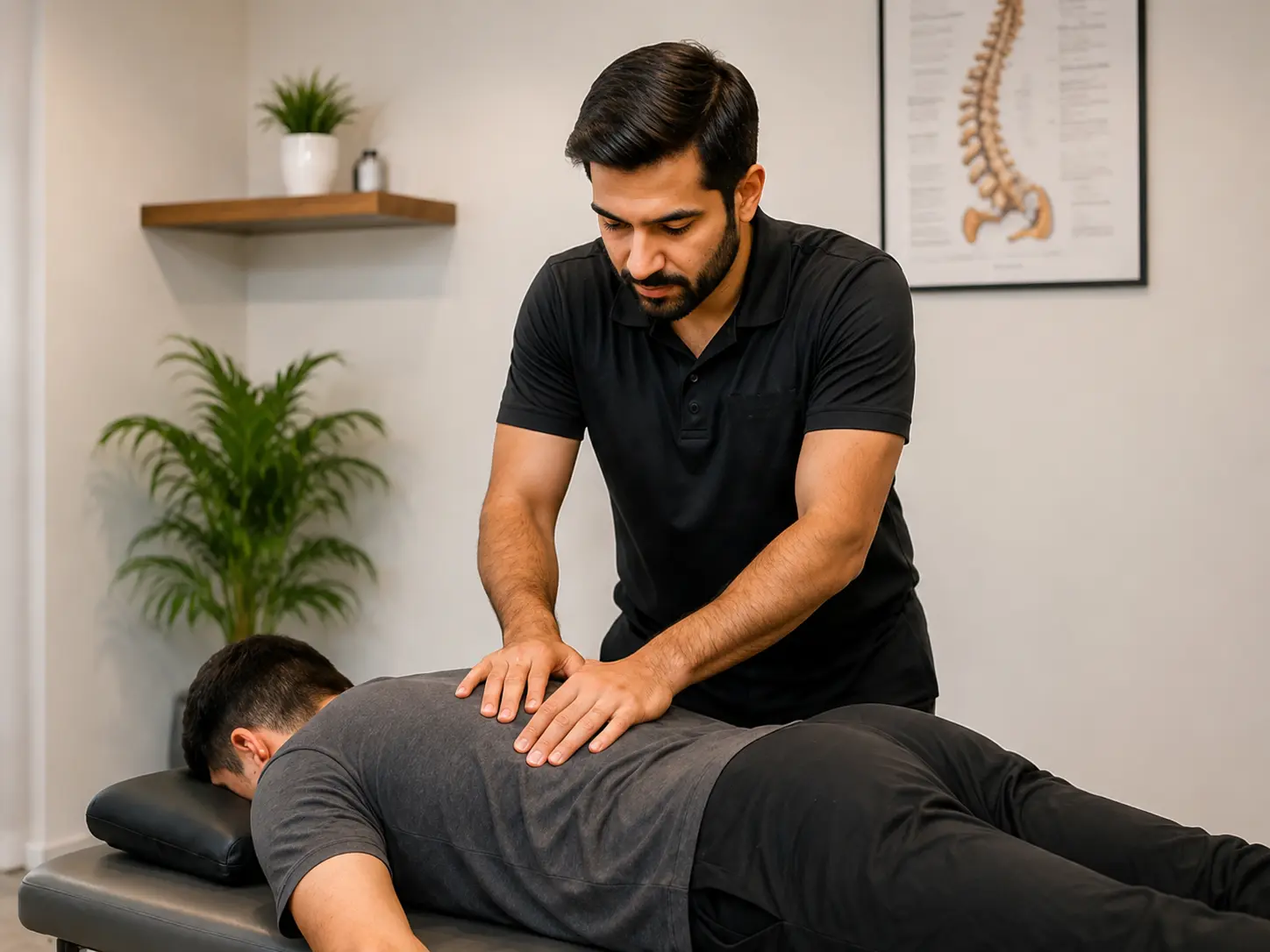
Manual and chiropractic techniques can help with symptoms and movement in the short term. They are most useful as one component of a plan that also builds strength and movement.
Hands-on techniques are one possible component of care, chosen after assessment. Their role is to help with symptoms and movement alongside the exercise work that carries your progress.
Manual therapy is a broad term for hands-on techniques. Spinal manipulation uses a controlled thrust; mobilisation uses movement without that thrust. They are different options, not interchangeable promises of a result. Ask which technique is proposed and why it is relevant to your assessment.
Temporary soreness or increased discomfort can occur after spinal manipulation. Rare serious complications, including neurological injury and stroke associated with neck manipulation, have been reported; the precise frequency is uncertain. Share your medical history and medicines, and discuss individual risks and alternatives before deciding.
At ThriveX, hands-on care is selected after assessment and combined with movement and exercise. You can ask about an exercise-led approach if you prefer to avoid manipulation. You can view the physiotherapists’ qualifications and manual therapy training on our team page.
General information to support your conversation with a clinician. Your assessment determines what is appropriate for you.
Book a time, message us, or call the clinic directly.