Loading…
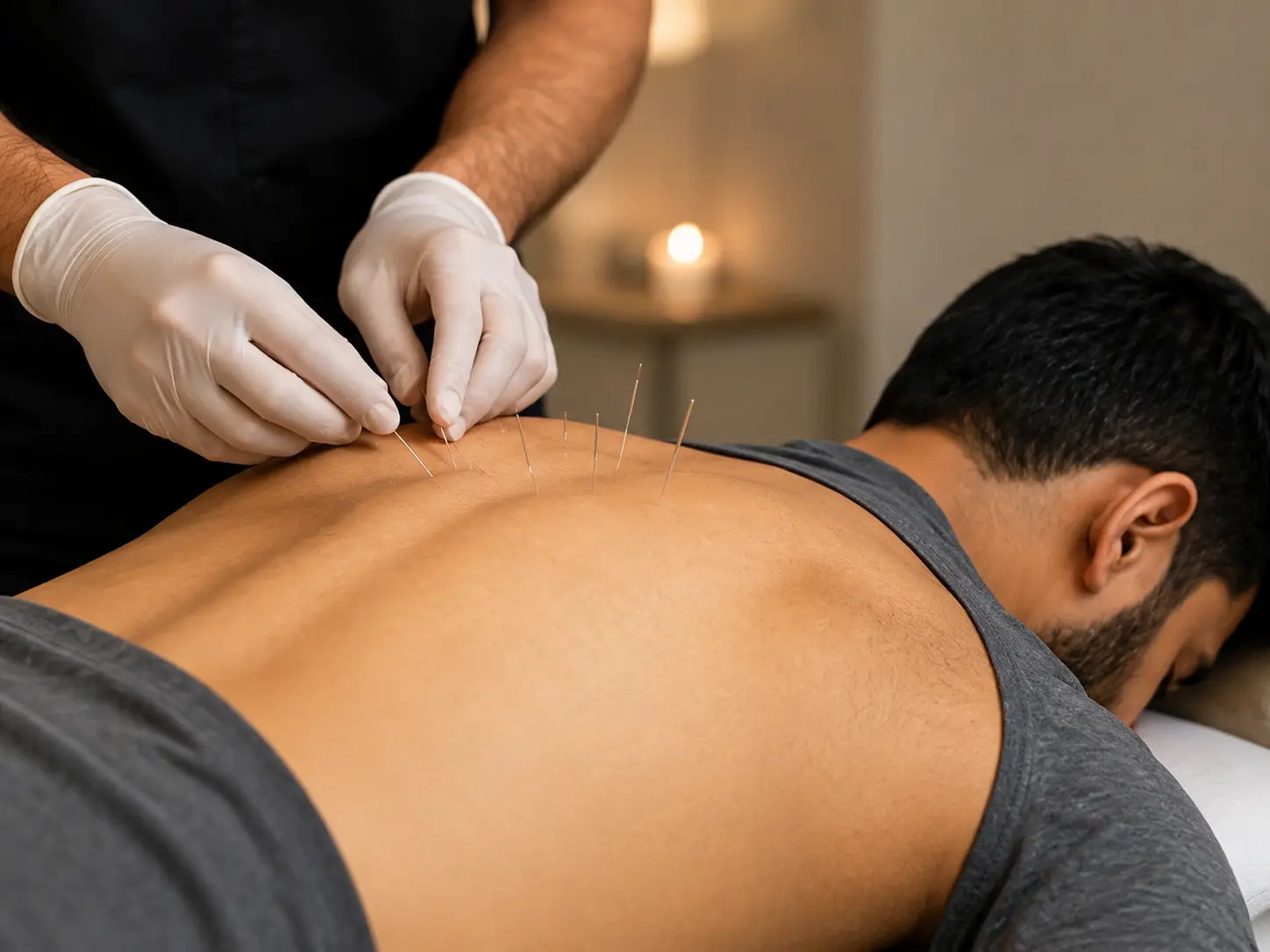
Dry needling is used selectively. The assessment determines whether it is appropriate for you, and it always sits inside a wider plan rather than standing in for one.
If dry needling is not suitable for you, we will say so and explain what we would do instead.
Dry needling uses fine needles inserted through the skin into selected muscle areas; no medicine is injected. It may be considered as one part of rehabilitation after assessment. It is optional, and you can discuss other approaches before giving consent.
Tell the clinician about pregnancy, recent surgery, blood-thinning medicines, immune conditions or a strong fear of needles. Soreness, bruising or faintness can occur; infection and a collapsed lung are possible complications. New breathlessness after needling needs emergency medical assessment, especially after treatment around the chest or shoulder.
Ask why needling is being considered, what benefit is realistic, what risks apply to you and how the response will be reviewed. You can view the physiotherapists’ dry-needling qualifications on our team page. An appointment enquiry does not commit you to having the procedure.
General information to support your conversation with a clinician. Your assessment determines what is appropriate for you.
Book a time, message us, or call the clinic directly.