In this guide
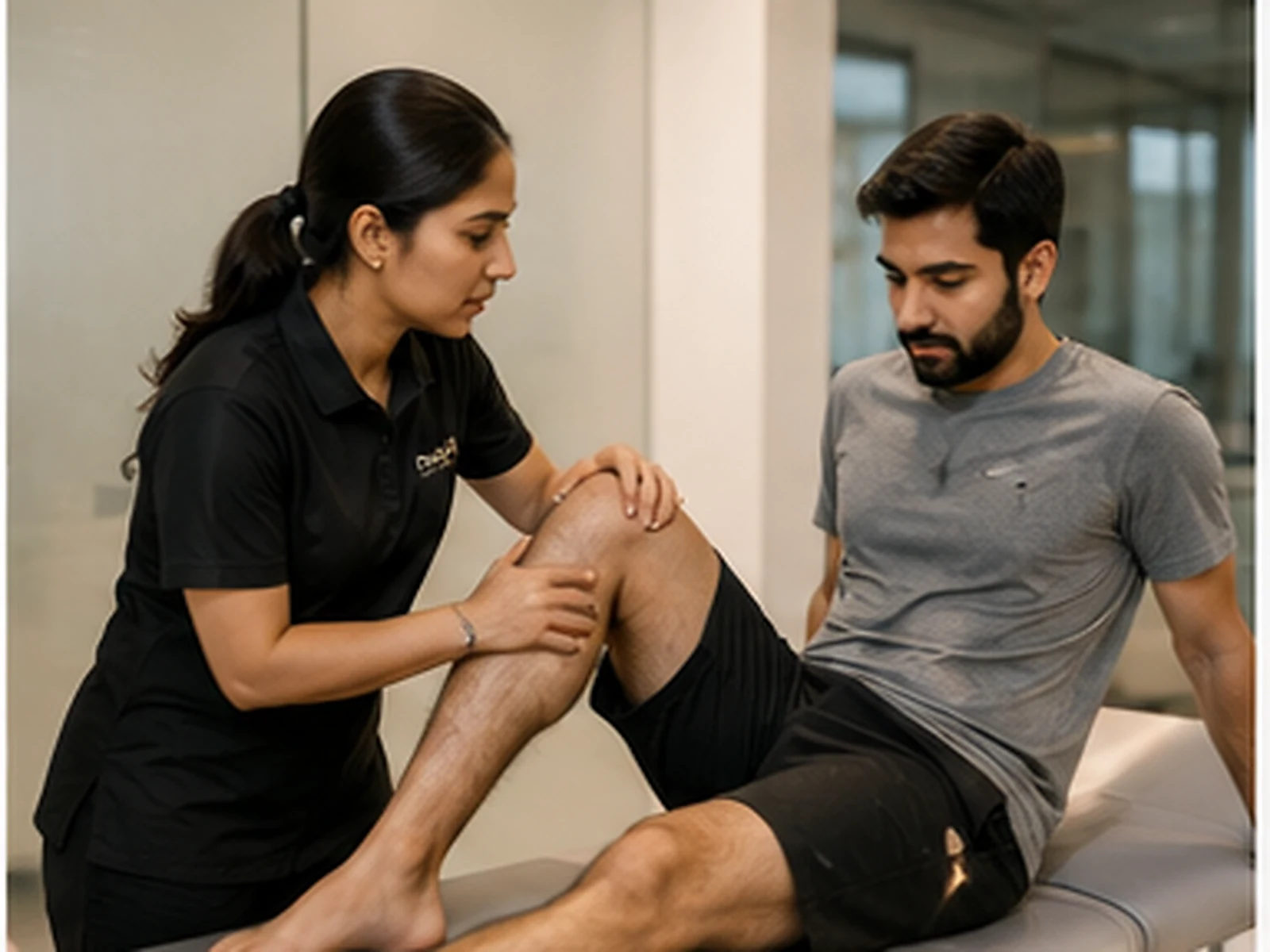
Representative service imagery.
When the lift is unavailable, a sore knee can turn an ordinary trip upstairs into something you have to plan. Some people feel pain around the kneecap; others notice stiffness, swelling or uncertainty about whether the leg will support them. Going down may feel different from going up.
Knee pain on stairs does not identify one diagnosis. The useful starting point is to understand the symptom pattern, check for problems that need medical attention, and assess how the leg handles the activities you need. The first assessment should explain the problem in terms you can use at home.
Why does a knee hurt on stairs?
Stair pain can occur with different knee problems. Pain around or behind the kneecap during bending activities may fit a patellofemoral pain pattern. Pain after an injury, recurrent swelling or a knee that locks needs a different discussion. The NHS overview of knee pain describes several possible causes and cautions against self-diagnosis.
The circumstances matter as much as the location. Tell your physiotherapist whether symptoms began after a twist, increased walking, returning to the gym or no obvious change. Explain whether the pain occurs on every step or only after several flights, and whether the knee settles quickly or remains sore afterwards.
For pain at the front of the knee, Cambridge University Hospitals' patient information discusses discomfort during bending and prolonged sitting. That pattern can guide questions, but a webpage cannot establish which tissues or factors are relevant to your knee.
Does stair pain mean osteoarthritis?
Not necessarily. Osteoarthritis is one possible explanation, particularly when joint pain relates to activity and stiffness is brief. Under NICE's osteoarthritis guideline, clinicians can diagnose typical osteoarthritis clinically in people aged 45 or older with activity-related pain and no morning stiffness, or stiffness lasting no more than 30 minutes. Imaging is not routinely required unless features suggest another or additional diagnosis.
This does not mean every adult with sore knees has arthritis, or that a scan is never useful. A clinician needs to check whether your history and examination fit the expected pattern. Bring existing reports if you have them; you do not need to arrange imaging solely to prepare for a physiotherapy conversation.
If osteoarthritis has already been diagnosed, treatment decisions should still reflect what you can do and what matters to you. Getting through stairs at home, walking to the shops and returning to exercise are different goals. Your plan should recognise those differences.
What should a knee physiotherapy assessment include?
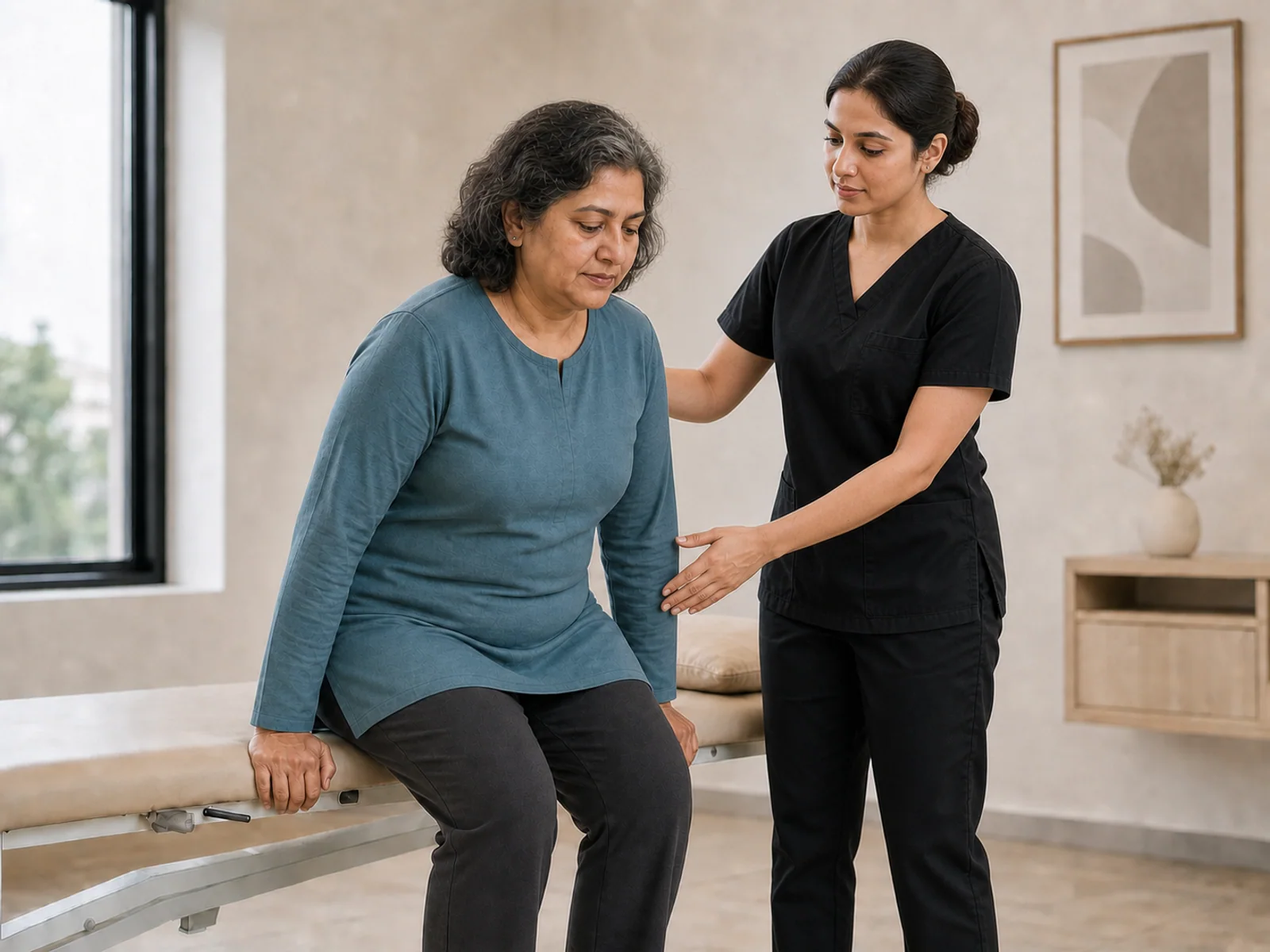
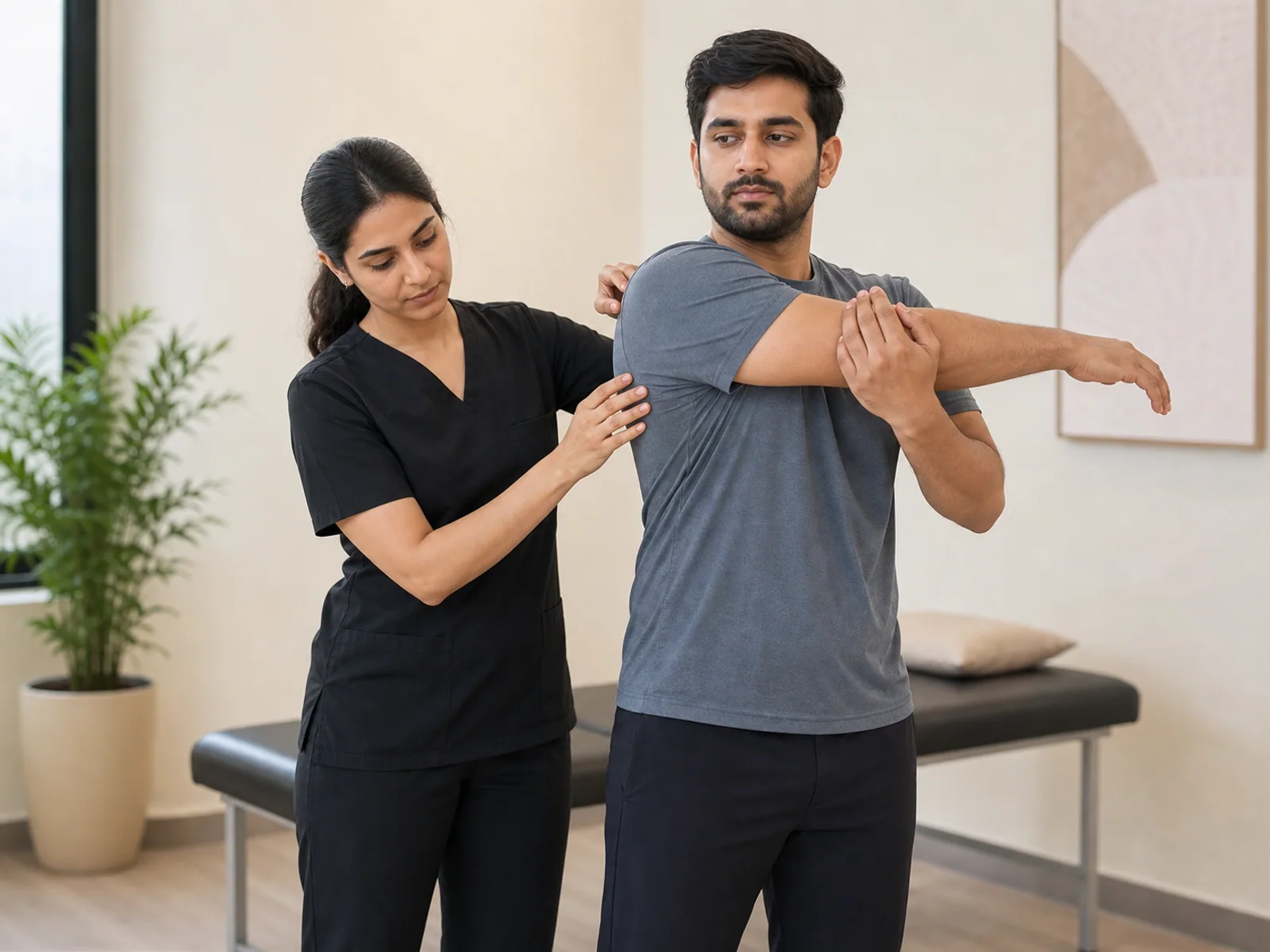
At ThriveX Physio, the existing knee pain and osteoarthritis service describes an assessment of knee movement, lower-limb strength and how you load the leg during everyday tasks. A useful appointment connects those findings with your own priorities.
You can help by arriving with a few concrete observations:
Where is the pain, and does it travel anywhere?
Is going up, going down or standing from a chair more difficult?
Has the knee swollen, locked or given way?
What activity can you currently do before symptoms change?
What would you like to manage more comfortably first?
Depending on what is appropriate, the clinician may look at knee bending and straightening, strength through the thigh, hip and calf, walking and a relevant functional task. A stair task should only be used when suitable; you do not need to prove how painful your knee can become.
Before leaving, ask for an explanation of the working assessment, what remains uncertain and whether medical review would help. Ask which findings the plan is trying to change. An exercise is more useful when you understand its purpose.
How can physiotherapy help knee osteoarthritis?
NICE recommends tailored therapeutic exercise for osteoarthritis, including local strengthening and general aerobic activity. It also explains that discomfort may increase when exercise begins, while consistent participation can improve pain, function and quality of life. This is a reason to agree a manageable starting point and review your response, rather than select the hardest exercise you can complete. Read the guideline's exercise recommendations.
The practical plan might focus on building capacity for chair transfers, walking or stairs. Exact exercises, resistance and frequency depend on the assessment. Ask how to adapt the plan when symptoms are more irritable and what response should prompt a call or reassessment.
If body weight is relevant, discuss support respectfully and in the context of your overall health. The NHS guide to osteoarthritis treatment includes exercise, weight management where appropriate, medicines and supportive approaches. Medicines should be discussed with a doctor or pharmacist who can consider your health conditions and current prescriptions.
NICE recommends considering manual therapy for hip or knee osteoarthritis only alongside exercise. Ask why any proposed hands-on treatment belongs in your care and how its value will be reviewed.
What can you do while waiting for an assessment?
Write down which activities aggravate your knee and what happens afterwards. Include ordinary details: stairs at the office, walking distance, sitting duration and carrying bags. This is more informative than repeatedly testing the knee to see if it still hurts.
Use safe supports already available, such as a secure stair rail, and avoid rushing when the leg feels unreliable. Ask for individual advice about walking aids if you feel you need one. A physiotherapist can help you decide how to organise necessary activity and rest around your current symptoms.
For a newly painful, swollen knee, the NHS suggests reducing strain initially and using a wrapped cold pack. Persistent symptoms deserve assessment. Guidance for a new injury should not become a long-term instruction to stop moving an arthritic knee. See the NHS knee pain advice.
When should you seek urgent medical help?
Seek urgent medical assessment if the knee is very painful, you cannot move it or bear weight, it becomes markedly swollen or changes shape, or it locks or gives way. A hot or red knee with a high temperature or feeling shivery also needs urgent assessment because infection is a concern. These warning signs are listed in the NHS knee pain guidance. In Islamabad, use local urgent medical services rather than waiting for a routine clinic booking.
Questions patients often ask
Should I exercise if I have osteoarthritis?
Ask your physiotherapist how the planned activities fit your current ability and how to distinguish manageable exercise discomfort from a change that needs review.
Will physiotherapy cure knee arthritis?
Physiotherapy aims to improve symptoms, movement and function. It cannot promise to reverse osteoarthritis. The NHS treatment guide explains that there is currently no cure, while several treatments can help people manage it.
How will I know whether the plan is helping?
Agree a small number of useful markers: easier chair transfers, a more manageable flight of stairs or a walking distance you can repeat. Review those alongside pain and swelling, and adjust the plan when the evidence calls for it.
If stairs or walking have become difficult, you can explore knee pain assessment at ThriveX Physio or contact the clinic. ThriveX Physio is in Allegiance Tower, New Blue Area, Islamabad, near F-9 Park. WhatsApp +92 341 7388830 to ask about an assessment.
Evidence & further reading
Guidance and research behind this article. Each source is linked so you can read its context and limits. Some guidance comes from UK or US health services; local referral and emergency pathways in Pakistan differ.
- NHS: Knee pain
Multiple possible causes, avoiding self-diagnosis, initial symptom advice, urgent signs including inability to bear weight, locking and a hot red knee with fever.
- NICE NG226: Osteoarthritis recommendations
Typical clinical diagnosis criteria, no routine imaging for typical osteoarthritis, tailored therapeutic exercise and manual therapy only alongside exercise.
- NHS: Osteoarthritis treatment and support
No current cure; symptom management can include exercise, appropriate weight management, medicines and support.
- Cambridge University Hospitals: Patello femoral syndrome
Anterior-knee discomfort during bending or prolonged sitting and selection of suitable exercises by a physiotherapist.