In this guide

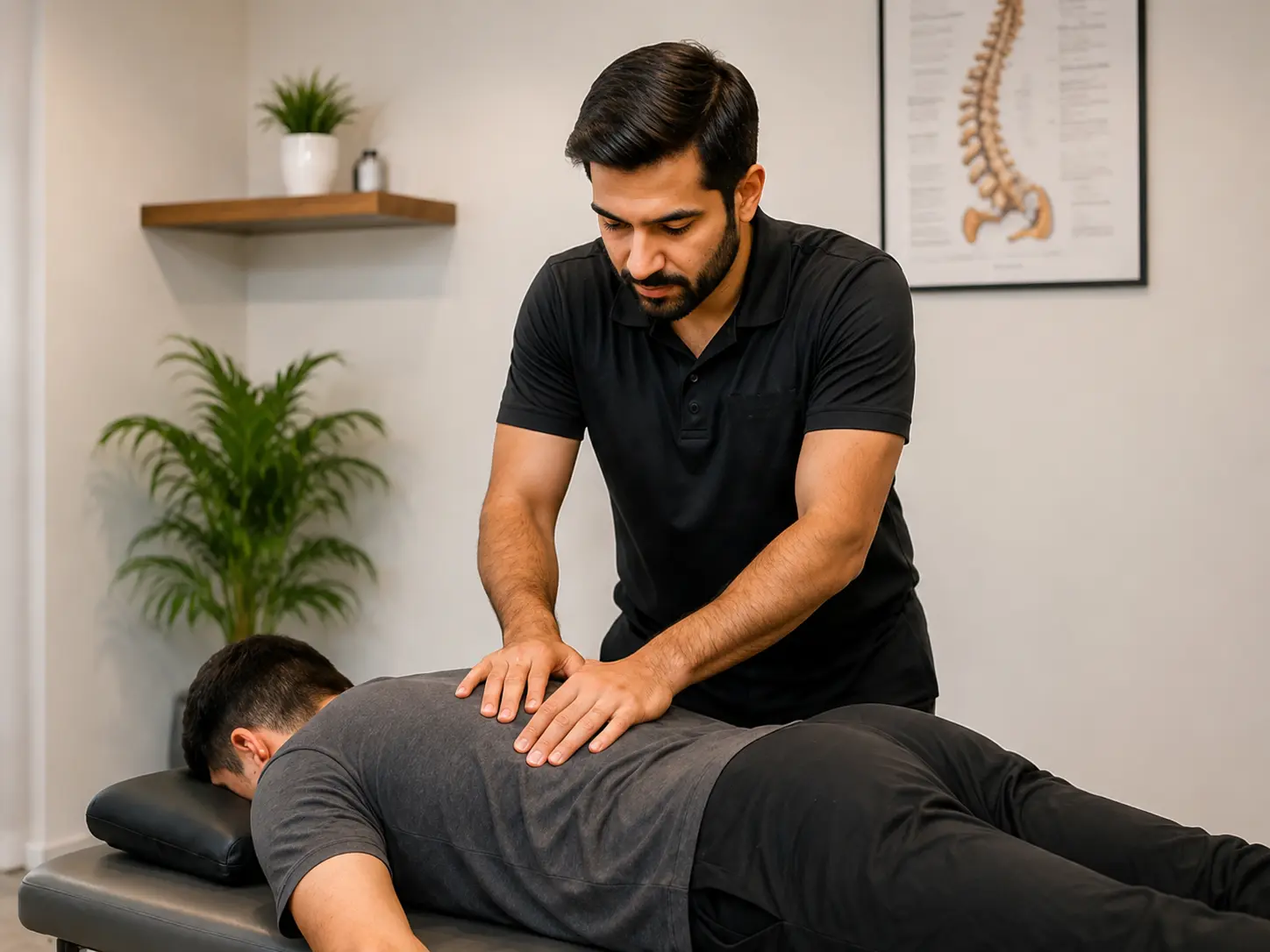
Representative service imagery.
Your neck feels manageable when you open the laptop. By the afternoon, turning towards a colleague is uncomfortable and the area between your shoulder blades feels tight. The same pattern returns the next working day.
If you are considering physiotherapy for neck pain, a useful starting point is understanding that pattern. Which tasks bring the symptoms on? What changes them? Is the problem mainly discomfort during work, or are there symptoms that need medical assessment first? A good conversation should answer those questions before settling on treatment.
When neck pain needs medical attention first
Desk work should not become an explanation for every new symptom. Seek hospital emergency care immediately for sudden weakness in an arm or leg, newly impaired walking or balance, reduced sensation in both arms or both legs, loss of hand coordination, or a new bladder or bowel problem with neck pain.
Neck pain beginning suddenly with dizziness, altered sight or speech, trouble chewing or swallowing, an episode of passing out, nausea or vomiting, an unusually severe headache, facial tingling or reduced sensation, or a sagging eyelid also calls for emergency care. Leicestershire Partnership NHS Trust explains these neck warning symptoms.
Back pain accompanied by chest pain needs emergency care. For pain higher in the back, including the area between the shoulder blades, arrange a doctor's review instead of assuming a desk-related muscle problem. These are separate recommendations in the NHS back-pain guidance.
Arrange urgent medical advice for neck pain with a fever, night sweats, unexplained weight loss, loss of appetite or a general feeling of illness. New neck pain without an obvious explanation also needs urgent advice if your medical history includes cancer, HIV, tuberculosis or inflammatory arthritis. Tell the clinician about that history when seeking help; a routine rehabilitation booking should not delay medical assessment. The same NHS Trust guidance explains these situations.
Is your posture the whole problem?
The phrase “bad posture” can make pain feel like a personal failure: if only you could hold your shoulders back all day, it would disappear. That is an oversimplified explanation. The Chartered Society of Physiotherapy's guidance on neck-pain causes places more emphasis on spending long periods in sustained positions than on a single supposedly incorrect posture. It also identifies sleep, stress and physical activity as factors that can affect sensitivity.
This makes your routine more useful to discuss than a photograph of one moment at your desk. A laptop session, several meetings and a long drive can put different demands on the same working day. The relevant question is how you manage those demands and how your symptoms respond.
You do not need to find one position and guard it perfectly. You need a practical plan for the work you actually do.
What an assessment should explore
A photograph of your desk is useful context for a posture and movement assessment at ThriveX Physio. Bring the working routine behind that photograph too: when the symptoms begin, which tasks become difficult and what you need to do afterwards. The discussion can then connect examination findings with a practical priority, such as finishing meetings, driving home or returning to an evening activity. Agree which change is worth trying first and how its effect will be judged.
Your symptom pattern
Be specific about where the discomfort is felt. “My upper back hurts” is a useful opening, but it leaves questions unanswered. Is the discomfort between the shoulder blades, across the shoulders, or at the base of the neck? Does it stay there? Is it present before work or mainly after particular tasks?
Explain what “worse” means for you. You might be unable to look comfortably over your shoulder while driving, need to end a meeting early, or avoid an evening activity. These examples help keep the assessment focused on function rather than a pain label alone.
The working day you can realistically change
An ideal workstation diagram is less helpful if you move between a home laptop, office desktop and client meeting rooms. Tell the clinician which parts of your day you control and which you do not. A recommendation that depends on equipment you cannot use is unlikely to become a lasting habit.
If headaches, arm pain, pins and needles or unusual sensations occur, mention them early. ThriveX's assessment process considers whether medical review should come first. You should not have to decide for yourself whether those symptoms belong to the same problem.
Movement, strength and your goal
The assessment looks at available movement and the capacity needed for your activities. A desk worker who also lifts at the gym may need a different discussion from someone whose main concern is a long commute.
Agree on a goal that means something outside the clinic. “Finish a working day with less disruption” is clearer than “fix my posture.” So is “turn comfortably during driving” or “return to the activity I keep cancelling.” Ask how the plan will measure that goal.
Desk adjustments should be practical experiments
Bring a photograph of your usual setup if you can, including the chair, screen and input devices. This gives the clinician a better starting point than a description of the equipment brand. Include the setup you actually use, even if it is a kitchen table or a shared workstation.
Questions worth discussing include:
Which task keeps you in the same position for the longest?
Is the change proposed possible during calls, meetings and focused work?
What would tell you that a change is helping?
If it is inconvenient or makes no difference, what is the next option?
Avoid changing several things at once without a way to judge the result. For example, if a clinician recommends a setup adjustment and a change to how you organise the day, agree how you will record their effect. This is a planning conversation, not a universal instruction to buy a particular chair or follow a rigid break schedule.
Where active rehabilitation fits
For ongoing neck pain, the Chartered Society of Physiotherapy's treatment guidance emphasises exercise and remaining as active as symptoms allow. It recommends seeking a physiotherapist's input when pain persists, recurs or limits valued activities despite staying active. The guidance also discusses hands-on care as an option for pain relief; it does not make passive treatment the whole long-term plan.
At ThriveX Physio, a plan for desk-related symptoms may combine changes to your working day with movement or strength work when appropriate. For each part, discuss the difficulty it is meant to address. Leave with a clear understanding of what to continue between appointments, how to judge your response and when the plan will be reviewed.
This article does not supply a stretch sequence or strengthening prescription. The appropriate movements, starting level and progression depend on your symptoms and examination. A video labelled “neck pain relief” cannot account for those details.
What a scan can and cannot explain
A report containing terms such as “degeneration” or “spondylosis” can sound definitive. However, the CSP's neck-pain information explains that such imaging findings do not have a strong relationship with a person's pain and can occur in people without neck pain. This is why the report needs clinical interpretation rather than being treated as a complete explanation.
If you already have imaging, bring the report and any medical advice. Ask which findings are relevant to your symptoms and whether they change the plan. That question leaves room for a finding to matter without assuming every word on the report is the reason you hurt.
How to make the first appointment useful
You do not need an elaborate symptom diary. A brief note can capture the tasks you find difficult, what you have already tried, relevant medical history, and the activities you want back. Bring any scan reports or referral information you have.
Useful questions include:
What did the assessment find, and what remains uncertain?
Why does the proposed plan fit my work and symptoms?
Which signs should lead me to seek medical advice?
What should I do if a recommended activity makes symptoms worse?
How will we decide whether the plan needs changing?
Discuss scheduling constraints at the start. Be cautious about any explanation that promises a permanent correction from one posture rule or a fixed number of visits.
Common questions
Can physiotherapy help with upper-back pain from desk work?
Physiotherapy may be appropriate, but the first step is to establish what your symptoms mean and whether medical care should come first. Describe the work task you struggle with and the activity you want back. That gives the clinician a concrete problem to assess and discuss with you; "upper-back pain" on its own does not identify the treatment.
Do I need to stop working until my neck feels normal?
Discuss which duties are difficult and what adjustments are possible. NHS neck-pain advice warns against activities such as driving or cycling if limited neck movement makes them unsafe. Your ability to do a task safely matters more than assuming all work must stop or that every activity should continue unchanged.
When should recurring desk pain be checked?
The NHS advises medical review when neck pain persists, causes concern, or comes with symptoms such as pins and needles or a cold arm. Repeated disruption to work or everyday activity is also a reason to arrange an assessment rather than repeatedly trying the same unsuccessful change.
Discuss your next step with ThriveX Physio
For desk-related neck, shoulder or upper-back symptoms, read about our posture and movement service or contact ThriveX Physio. The clinic is at Allegiance Tower, near F-9 Park, in New Blue Area, Islamabad. You can also message the clinic on WhatsApp to discuss an assessment.
Evidence & further reading
Guidance and research behind this article. Each source is linked so you can read its context and limits. Some guidance comes from UK or US health services; local referral and emergency pathways in Pakistan differ.
- Chartered Society of Physiotherapy: causes of neck pain
Sustained positions, sleep/stress/activity factors, and the limited relationship between degeneration/spondylosis findings and neck pain.
- Chartered Society of Physiotherapy: treatment for neck pain
Active care and exercise for ongoing neck pain; physiotherapy when pain persists, recurs or limits activity; contextual role of hands-on care.
- NHS: neck pain
Avoid driving/cycling if restricted neck movement makes them unsafe; medical review for persistent/concerning pain or pins and needles/cold arm.
- Leicestershire Partnership NHS Trust: neck pain
Complete neurological and vascular neck warning symptoms requiring hospital assessment; urgent systemic symptoms and relevant history, including appetite loss and HIV.
- NHS: back pain and when to seek help
Back pain with chest pain needs emergency care; upper-back pain between the shoulders is a reason for a doctor's review.